
Safe First Date Checklist After Matching on a Dating App
A practical safety checklist for your first date after matching on a dating app. Pre-date verification steps, safety habits during the date, and what to do if something feels wrong.
Matching with someone on a dating app is easy. Meeting them in person for the first time is where the real stakes begin. Most first dates from dating apps go fine — two people meet, the conversation is either good or awkward, and everyone goes home safely. But "most" is not "all," and the gap between a great first date and a dangerous one often comes down to a few practical steps that take less than ten minutes to complete. The problem is that excitement tends to override caution. When you have been texting someone for days and the chemistry feels real, the last thing you want to do is slow down and run through a checklist. But that is exactly when a checklist matters most — not because every match is a threat, but because the ones who are threats look identical to the ones who are not. The FTC has documented a steady increase in reports tied to people met through dating platforms, and safety teams at apps like Tinder and Bumble actively encourage users to take precautions before meeting offline. The advice is consistent across every credible source: verify before you go, tell someone where you are going, and keep your independence during the date itself. This guide is structured as a two-part checklist. The first part covers what to check and confirm before you leave the house. The second covers safety habits that matter during and after the date. None of this requires paranoia or special tools — just a few deliberate decisions that protect you without ruining the experience. If you have already gone through our guide to red flags in dating profiles, you are starting from a stronger position. If you have not, consider running the profile through our red flag checker before confirming the date.

Warning Signs to Watch For
⚠️ Verify their identity with a video call before agreeing to meet
A five-minute video call is the single most effective safety step you can take before a first date. It confirms that the person matches their photos, that their voice and mannerisms feel consistent with how they have communicated over text, and that they are willing to show up as themselves before asking you to show up in person. You do not need to frame it as a safety measure — a casual "I would love to say hi before we meet" is enough. If they refuse repeatedly or offer a rotating set of excuses, that pattern is worth paying attention to. Someone who genuinely wants to meet you will not treat a brief video call as an unreasonable request. If you want a deeper breakdown of what to look for during this step, see our guide to spotting bot profiles.
⚠️ Do a basic background check on their profile details
You do not need a private investigator. You need five minutes and a search engine. Take their first name and any details they have shared — profession, school, city — and see if any of it is verifiable online. Check whether their photos appear on other accounts under a different name using a reverse image search. Look for a LinkedIn, a public social media account, or anything that confirms the person exists as described. This is not about digging through someone's life. It is about confirming that the basics are real. If nothing about them is findable and they have avoided specifics throughout the conversation, consider that a data point worth weighing before you commit to being alone with them.
⚠️ Choose a public location you already know
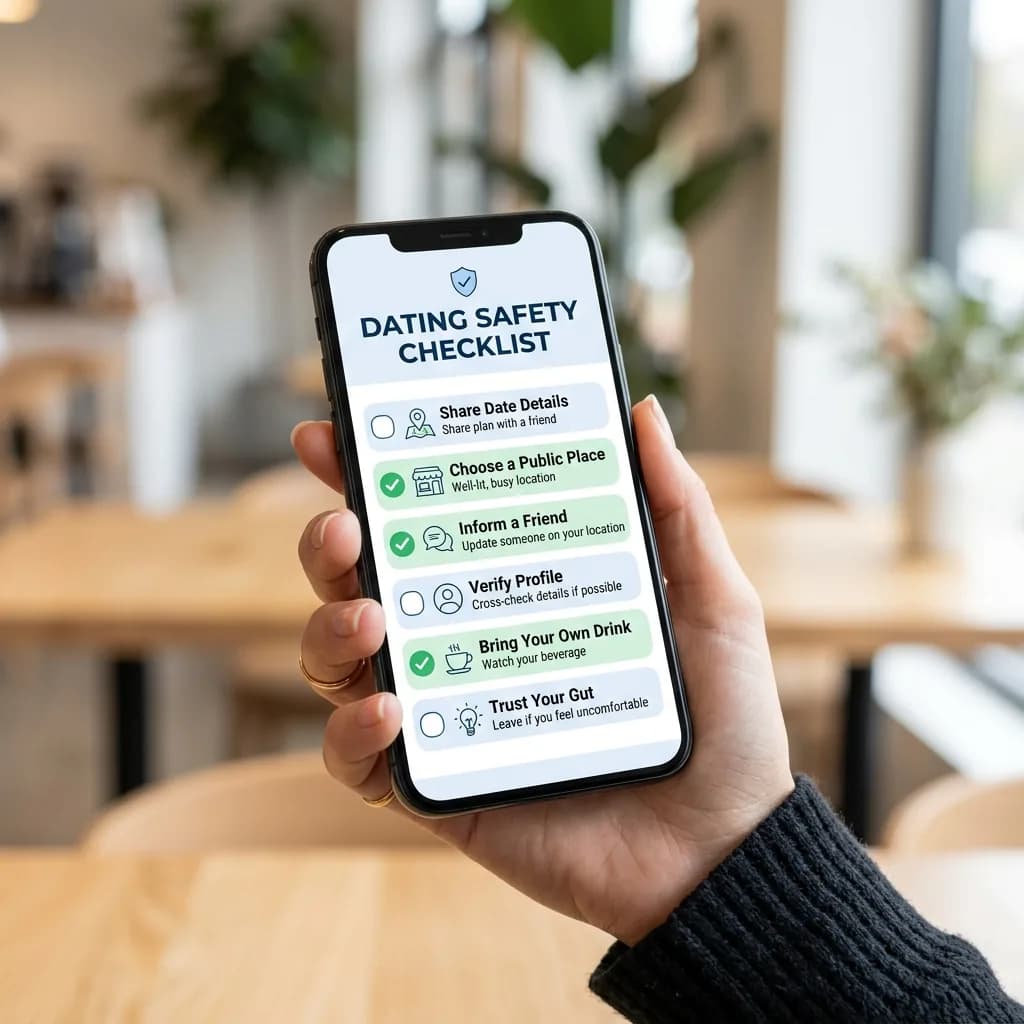
The date should happen somewhere public, well-lit, and familiar to you. Coffee shops, busy restaurants, and popular bars during peak hours are all solid choices. Avoid agreeing to meet at their apartment, a remote park, a private event, or any location that limits your ability to leave easily. If you need inspiration for genuinely good first date spots, our date idea finder suggests options sorted by vibe and safety — or check out our full guide to first date ideas that actually work. You want a place where other people are around, where staff is present, and where you can step outside or leave without needing to negotiate your exit.
⚠️ Tell a friend exactly where you are going and when
Share the name and address of the venue, the time you expect to arrive, and the first name and photo of the person you are meeting. This takes about thirty seconds over text and creates an immediate safety net. Some people set up a check-in system — a text at a set time confirming everything is fine, with the understanding that no text means something might be wrong. Others simply share their live location through their phone. The method matters less than the habit. What you are really doing is making sure that at least one person who cares about you knows where you are and who you are with. That single step changes the risk profile of the entire evening.
⚠️ Arrange your own transportation to and from the date
Drive yourself, take a rideshare you booked, or use public transit. Do not accept a ride from your date for the first meeting. This is not about being rude — it is about maintaining your ability to leave independently at any point. If you accept a ride, you are depending on a person you have never met in person to take you home when you decide you want to go. That is a vulnerability you do not need to accept on a first date. The same logic applies to carpooling or agreeing to go somewhere else together after the initial meeting. You can always choose to extend the date. You should always be able to choose to end it.
⚠️ Review the conversation for inconsistencies before you go
Scroll back through your messages before the date and read them with fresh eyes. Do the details hold up? Has their story about their job, living situation, or background stayed consistent, or have things quietly shifted? Have they answered your direct questions, or do they consistently deflect and redirect? Small inconsistencies in a text thread are easy to miss in real time because each message feels isolated. When you read the full conversation back, patterns that were not obvious before tend to become visible. Our fake profile checker can also help you organize what you have noticed into a clearer picture.
⚠️ Check that your phone is charged and your location sharing is active
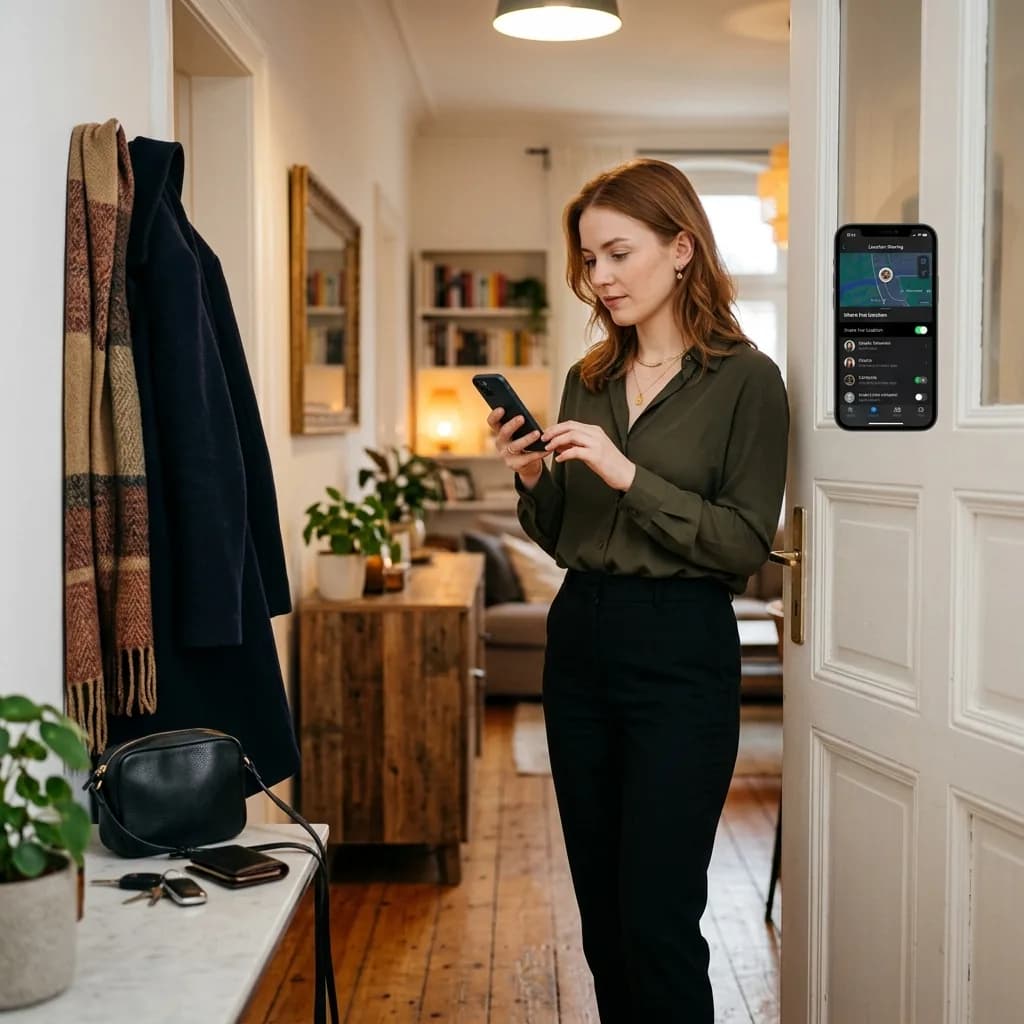
This sounds basic because it is — and it still catches people off guard. Leave the house with a fully charged phone. Make sure your location sharing with a trusted contact is turned on and working correctly. Have your emergency contacts accessible from your lock screen. If you are using a safety app, confirm it is set up and functioning before you walk out the door. These are not dramatic precautions. They are the same level of preparedness you would apply to any situation where you are spending time with someone you do not know well in a place that is not your home.
⚠️ Trust what the pre-date conversation is telling you
If someone has been pushy about where to meet, dismissive of your boundaries, overly sexual before you have expressed mutual interest, or consistently pressuring you to share personal details like your home address or workplace, those are not signs of enthusiasm. Those are signs that your comfort is not their priority. The safest first dates start from conversations where both people respected the pace. If the pre-date dynamic already feels uncomfortable and you are hoping the in-person meeting will be different, that hope is rarely justified. You are allowed to cancel. You are allowed to reschedule. You are allowed to stop responding entirely.
⚠️ Look up the venue independently
If your date suggested the location, verify that it exists and is what they described. A quick search confirms the address, hours, reviews, and general vibe. Occasionally, people suggest locations that sound like busy restaurants but turn out to be isolated, closed, or not quite what was described. This takes under a minute and removes one category of surprise entirely. While you are at it, note where the exits are and whether the area around the venue feels safe for walking to your car or a rideshare pickup point after the date ends.
⚠️ Do not share your exact home address before or during the first date
This seems obvious, but it comes up more often than you would expect. Someone offers to pick you up — and suddenly they have your address before you have spent a single minute with them in person. Even well-intentioned people do not need your home address on a first date. If they ask, provide a nearby landmark or the venue address. If they insist, that insistence tells you something. For a broader look at what to keep private and when, see our guide to protecting your privacy on dating apps.
How to Protect Yourself
💡 Keep your first drink simple and watch it
Order your own drink and keep it in your line of sight. This is not about assuming the worst about every person you meet — it is about maintaining a habit that removes a specific category of risk entirely. If you step away from the table, finish what is in your glass when you get back or order a new one. If your date orders for you while you are away, that is your call to evaluate, but you are never wrong to order a fresh drink. The goal is simple: maintain full awareness throughout the date so you can trust your own read on how the evening is going.
💡 Have a check-in call or text scheduled with a friend
Set up a specific time for a friend to text or call you during the date. This gives you a natural exit point if you need one and a built-in safety check that does not require you to initiate it. If the date is going well, you text back that everything is great and keep going. If it is not, you have a ready-made reason to step away. Some people feel awkward about this. Do it anyway. A good date will survive a two-minute interruption. A bad situation might not survive you having no outside contact for two hours.
💡 Pay attention to how they handle your boundaries during the date
The first date is a live demonstration of how someone responds to limits. If you say you do not want another drink and they order one anyway, notice that. If you mention wanting to keep the evening short and they push to extend it, notice that. If you set a physical boundary — anything from not wanting to be touched to preferring to sit across the table instead of next to each other — and they test it or ignore it, that is real-time information about how they handle the word no. People show you their relationship with boundaries early. Believe what you see.
💡 Do not go to a second location on the first date
The safest first dates happen in one place. If the date is going well and your date suggests going somewhere else — a different bar, their apartment, a walk in a quiet area — it is okay to decline. You are not being a buzzkill. You are keeping the first meeting within the parameters you set when you planned it. You can always agree to a second date in a new location once you have had time to reflect on how the first one went. Spontaneity feels exciting, but maintaining your plan is a safety habit that costs nothing and protects a lot.
💡 Leave if something feels wrong, without waiting for proof
You do not owe anyone a complete date. If your gut tells you something is off — the person does not match their photos, the energy feels aggressive or manipulative, the situation is not what was described — you are allowed to leave immediately. You do not need to justify it in the moment. You do not need to wait until something concrete happens. A polite "I am not feeling well, I need to go" is enough. An honest "I am not comfortable" is also enough. Your safety is more important than their feelings, and any decent person will understand that.
💡 Debrief with someone you trust after the date
When you get home, send the friend who had your details a quick update. Let them know you are safe. Then, while the date is still fresh, talk through anything that felt off. Sometimes things that seemed fine in the moment look different when you describe them out loud. A friend who was not caught up in the chemistry or the nervousness can often hear warning signs that you experienced but did not fully process. This is not about finding problems. It is about making sure your next decision — whether that is a second date or no contact — is grounded in a clear picture of what actually happened.
💡 Limit the personal information you share during the date itself
It is natural to open up when conversation is flowing, but your first date is still a meeting with someone whose character you are actively evaluating. Hold back on details that could be used to find you — your exact workplace address, your daily routine and schedule, where you live specifically, or your last name if they do not already have it. You can share all of this later once trust has been established through repeated, consistent behavior. On the first date, be warm, be genuine, and be strategically vague about anything that would make you easy to locate or track. This is not dishonesty. It is appropriate caution with someone you are still getting to know.
💡 Screenshot and save the profile and conversation thread
Before the date, take screenshots of their dating profile and your message history. If the date goes well, you will never need them. If something goes wrong — they behave inappropriately, they misrepresented themselves, or the situation escalates — having a record of the profile and conversation becomes important for reporting to the app, filing a police report, or simply remembering details clearly. Profiles can be deleted, messages can be unmatched and lost, and memories shift over time. A thirty-second screenshot preserves what you know right now, while the information is still available.
Frequently Asked Questions
Related Guides
Online Dating Safety
Explore related guides and tools to help you navigate this topic.
Get weekly bio ideas, openers, and dating templates
Join thousands of people improving their dating game with free weekly tips. No spam, unsubscribe anytime.
No spam. Free tips only. Unsubscribe anytime.
By subscribing, you agree to our Privacy Policy.
Use our safety tools
Check profiles and conversations for red flags with our free AI-powered safety tools.