
Romance Scam Warning Signs — How to Recognize and Escape Them
A clear guide to recognizing romance scam warning signs early — from love-bombing tactics to financial pressure — so you can protect yourself before the damage is done.
Romance scams are among the most financially and emotionally costly forms of online fraud, and they are growing more sophisticated every year. According to the FTC, Americans reported losing over $1.3 billion to romance scams in a single recent year — and those are just the cases that get reported. A scammer does not announce themselves. They build trust deliberately, often over weeks or months, before the situation shifts in ways that are hard to identify clearly when you are already emotionally invested. The strongest protection is early pattern recognition. This guide covers the warning signs that appear at every stage of a romance scam — from the first message to the eventual financial ask — so you can identify what is happening before the cost becomes serious. If you also want to learn how to spot automated or bot-driven accounts, see our guide to spotting bot dating profiles.
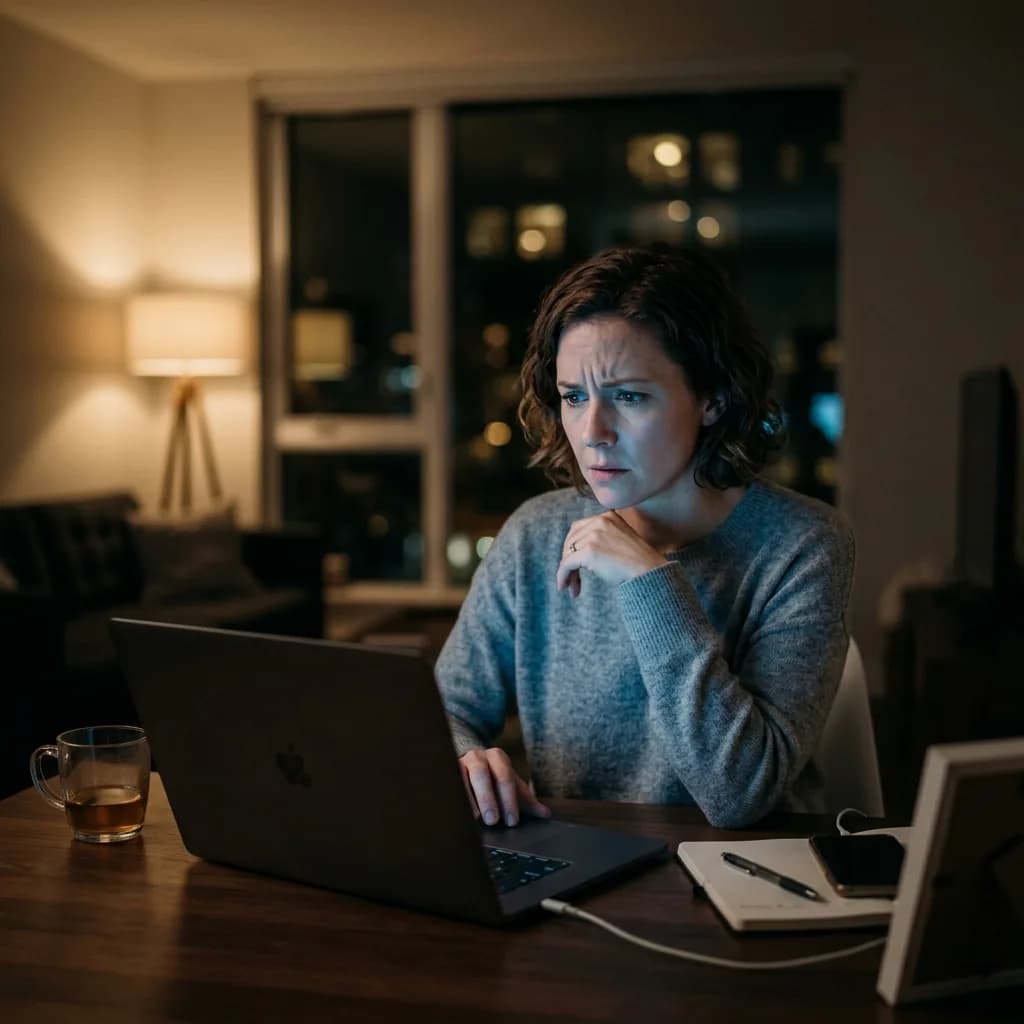
Warning Signs to Watch For
⚠️ They fall for you extremely fast
Scammers use accelerated emotional intimacy as a tool. If someone you have never met in person is describing you as their soulmate, expressing intense love, or making future plans within the first week of contact, that speed is intentional. Real emotional connection develops gradually. Manufactured connection is designed to skip the stages that allow you to evaluate someone clearly. The faster the emotional escalation, the less time you have to notice inconsistencies.
⚠️ Their story is perfectly constructed but stays vague on specifics
Romance scammer profiles often have an appealing surface — a widowed engineer working abroad, a military officer stationed overseas, a successful professional traveling for work. These setups are designed to explain why they cannot meet in person and why their life is dramatic enough to require financial help later. The problem shows up when you probe for ordinary detail. Real people have specific neighborhoods, specific routines, specific memories. Scripted profiles answer broadly and redirect rather than adding natural context.
⚠️ Every verification attempt gets blocked
Asking for a live video call, a current selfie with a specific gesture, or any form of real-time verification is one of the clearest tests available. Scammers nearly always have a reason this cannot happen — bad connection, broken camera, work security rules, or an inconvenient schedule that stays perpetually inconvenient. Real people may sometimes be unavailable, but they can eventually verify. Someone who deflects every single attempt across weeks is almost certainly not who they claim to be.
⚠️ A financial crisis or investment opportunity appears
The financial ask is the endgame of almost every romance scam, but it often arrives wrapped in an emotional story rather than a direct request. A sudden medical emergency, a business deal that needs a short-term loan, a stranded-abroad situation, or an investment opportunity that seems too good to pass up are all common scripts. The exact scenario changes but the pattern is consistent: emotional pressure plus a request for money from someone you have never met in person. Any financial request from an unverified online contact should be treated as a serious warning sign.
⚠️ They discourage you from talking to friends or family about them
Isolation is a key element of many romance scams. If the person you are talking to suggests keeping the relationship private, expresses concern about your friends or family 'not understanding,' or reacts negatively when you mention discussing the connection with people you trust, pay attention. Healthy relationships do not typically require secrecy. Pressure to keep a romantic connection hidden is often designed to prevent the outside perspective that might let you see the situation more clearly.
⚠️ Communication has patterns that suggest scripting or automation
Scammer communications often have tells that become visible over time. Responses that answer a different question than you asked, messages that feel slightly off from the tone of the previous exchange, unusually formal language that does not match a casual conversation, or responses that arrive at strangely consistent intervals can all signal automation or scripting. No single sign proves anything, but a cluster of oddities in communication style is worth noticing.
⚠️ They become defensive or angry when you question anything
When someone who has been warm and attentive suddenly becomes irritable, hurt, or accusatory the moment you ask a clarifying question, that shift is significant. Healthy relationships can tolerate questions. Scammers often cannot, because questions threaten the script. Guilt-tripping, playing the victim, or suggesting that your concern means you do not trust them are all common deflection tactics. If asking reasonable questions produces emotional pressure rather than reasonable answers, that pattern matters.
⚠️ Something feels persistently off even when you cannot name it
Sometimes the warning sign is not one obvious flag. It is the accumulation of small things that each seem explainable on their own but together create a feeling that something is not right. The photos are good but too perfect. The story adds up on the surface but never produces real specifics. The warmth is consistent but feels slightly rehearsed. Your instinct is often detecting a pattern before your conscious mind has assembled it. Slow down and verify when that feeling persists.
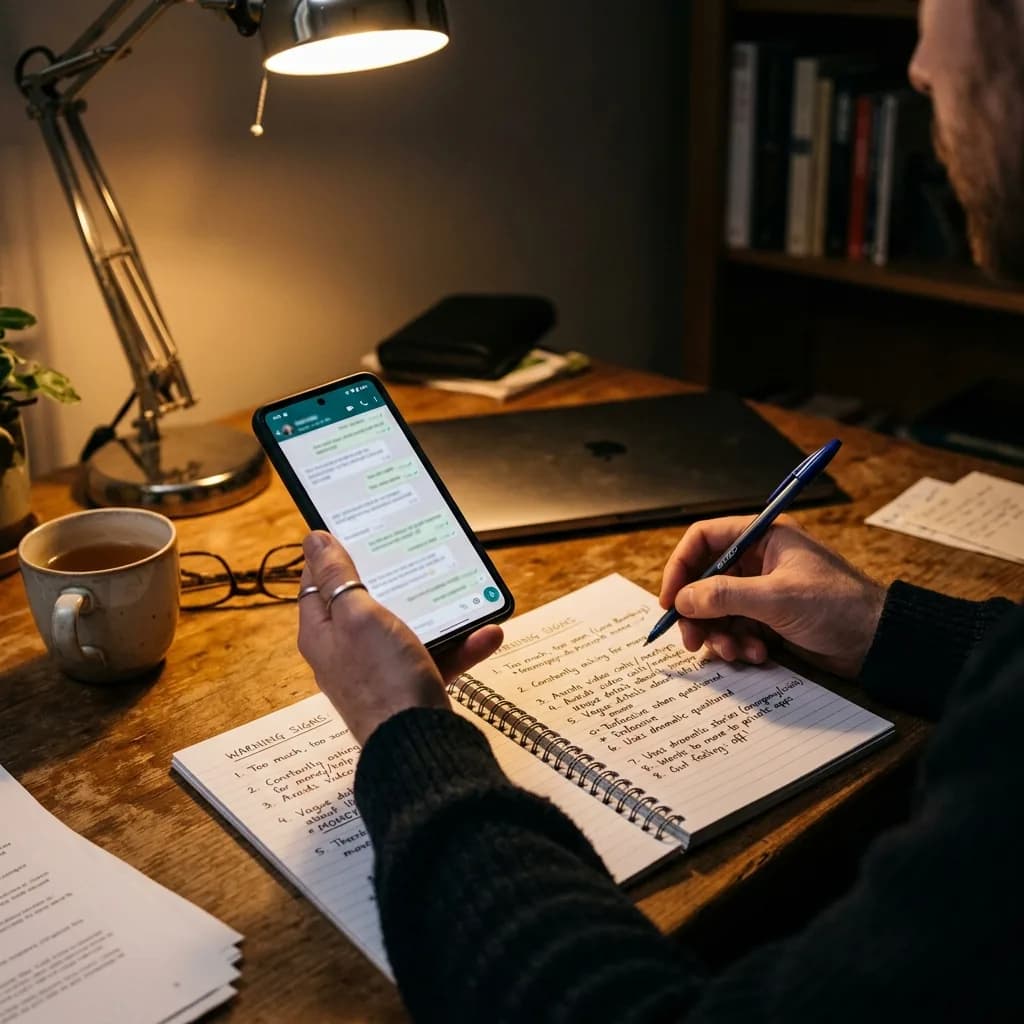
How to Protect Yourself
💡 Search their name, photos, and claimed employer online
Run a reverse image search on their profile photos. Search their full name alongside their claimed job or location. Look for any inconsistencies between what appears online and what they have told you. This is not foolproof — sophisticated scammers build durable fake identities — but it catches a significant portion of common scam profiles and costs only a few minutes.
💡 Request a live video call before the connection deepens
A short live video call is one of the most reliable verification steps available. Ask for one early — before you are emotionally invested enough to rationalize why it keeps not happening. If someone is genuinely who they claim to be, a brief live call is a reasonable request they can accommodate. If every attempt is blocked, you have important information.
💡 Never send money regardless of how credible the story sounds
This is the most important rule. Do not send money, gift cards, cryptocurrency, or wire transfers to anyone you have not met and verified in person. No matter how emotionally real the relationship feels, financial requests from unverified online contacts are a major red flag. The sophistication of the story does not change the risk.
💡 Tell someone you trust about the relationship
Outside perspective is one of the most effective early-warning systems available. Talk to a friend or family member about the person you are talking to. Describe the situation factually and listen to their reaction. People who are not emotionally invested in the connection often spot inconsistencies or concerns that are harder to see from inside the experience.
💡 Use a scam awareness tool as a second opinion
Our red flag checker tool and other safety checkers can help you organize your observations about a concerning interaction. They work best as a second opinion layer, not as a replacement for your own judgment. If the tool flags something that you had already felt uneasy about, that alignment is worth taking seriously.
💡 Know that recovery is possible if you have already been targeted
If you realize you have been involved in a romance scam, you are not alone and you are not at fault. These operations are professional and deliberate. Report the account to the platform, contact your bank immediately if any financial transfer occurred, and consider reporting to your country's fraud or consumer protection authority. Emotional recovery takes time, but practical steps can be taken quickly.
Frequently Asked Questions
Related Guides
Dating App Safety and Scams
Explore related guides and tools to help you navigate this topic.
Get weekly bio ideas, openers, and dating templates
Join thousands of people improving their dating game with free weekly tips. No spam, unsubscribe anytime.
No spam. Free tips only. Unsubscribe anytime.
By subscribing, you agree to our Privacy Policy.
Use our safety tools
Check profiles and conversations for red flags with our free AI-powered safety tools.