
Video Call Safety Tips Before Meeting Someone From a Dating App
How to use video calls as a safety step before meeting someone from a dating app. Setup tips, what to look for, and how to evaluate whether to meet in person.
A video call is the most practical safety step between matching with someone on a dating app and meeting them in real life. It verifies that the person behind the profile actually looks like their photos, gives you a read on their energy and communication style, and creates a low-risk environment to evaluate whether an in-person meeting feels right. Despite these benefits, most people skip video calls entirely. Some feel they are awkward. Others worry about seeming overly cautious. Some simply do not think about it. But a fifteen-minute video call can prevent hours of wasted time on a bad date, reveal dealbreakers that text conversations hide, and — most importantly — confirm that the person you have been talking to actually exists. This guide covers how to suggest a video call without making it feel like an interrogation, how to set yourself up for a comfortable experience, what to pay attention to during the call, and how to make the decision about meeting in person based on what you observe.

Warning Signs to Watch For
⚠️ They consistently refuse or delay video calls
One postponement is normal. Two is understandable. A persistent pattern of avoidance after several weeks of conversation is a significant warning sign. Someone who is genuinely interested and genuinely who they say they are will eventually agree to a video call. The excuses may vary — camera issues, bad timing, shyness — but the pattern is what matters. If they cannot show their face on a screen, meeting them in person carries even more uncertainty.
⚠️ Their video appearance does not match their photos
Some difference between photos and real-time video is normal — lighting varies, angles differ, and everyone looks slightly different on camera. But if the person on the video call looks significantly different from their profile photos — different age range, different body type, different features — that discrepancy needs to be acknowledged. Heavily filtered or outdated photos that misrepresent current appearance are a form of deception that predicts other dishonesty.
⚠️ They seem rehearsed or evasive about basic questions
During a video call, pay attention to how naturally someone answers basic questions about their daily life, their job, and their interests. A real person talks about these things fluidly because they are describing their actual life. Someone who is fabricating details may pause unusually, give vague answers, redirect questions, or seem to be reciting prepared responses rather than speaking naturally.
⚠️ The background or environment seems inconsistent
This is subtle but worth noticing. If someone claims to live alone but there are signs of other people in the background, or claims to be at home but appears to be in a public space, or uses a virtual background to hide their surroundings entirely, these inconsistencies may not be alarming individually but are worth noting alongside other signals.
⚠️ They pressure you to meet immediately after a brief call
A video call should reduce pressure, not increase it. If someone uses a five-minute video call as a reason to immediately push for an in-person meeting — especially at their place or in a private setting — that urgency deserves caution. A genuine person respects the pace of building comfort. Pressure to skip steps is a control tactic, not enthusiasm.
⚠️ They become hostile or defensive when you suggest a call
Asking for a video call before meeting someone from a dating app is a reasonable, mainstream safety practice. If someone reacts with anger, guilt-tripping, or accusations of being too paranoid, their reaction tells you more about their character than any conversation could. A safe person respects safety boundaries. An unsafe person resents them.
How to Protect Yourself
💡 Frame the video call as positive, not suspicious
The way you suggest a video call affects how it is received. Instead of I want to verify you are real, try something like: I have really enjoyed our conversations — I would love to do a quick video call before we meet up. It would be nice to hear your voice. This frames the call as a natural next step in getting to know each other rather than a trust test. Most people respond positively to this approach.
💡 Keep the first video call short and low-pressure
A fifteen to twenty minute call is ideal for a first video chat. Long enough to get a sense of someone's energy and verify their identity, short enough that it does not feel like a commitment. Treat it like a brief, casual check-in rather than a formal date. If it goes well, you can always do a longer video call before meeting or simply move to an in-person date.
💡 Choose your environment carefully
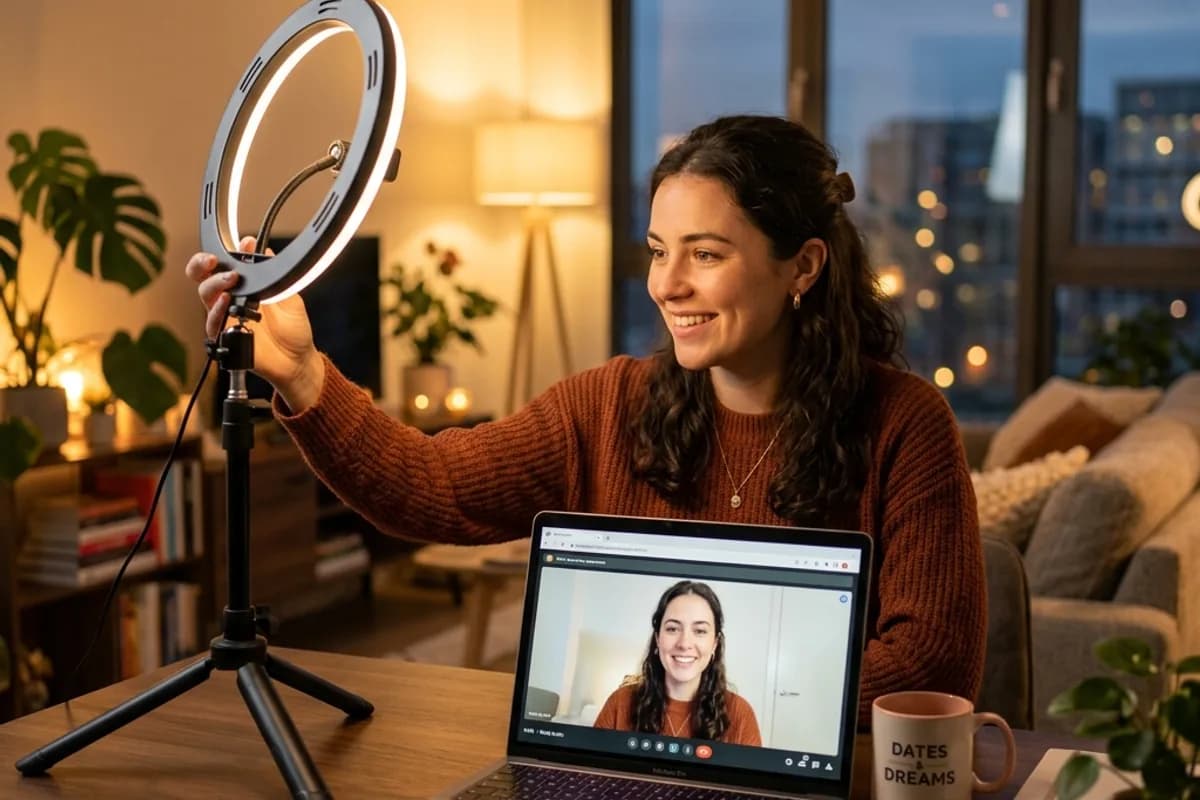
Before the call, check what is visible behind you. Remove anything that reveals your exact address, workplace documents, mail with your full name, or personal information displayed on screens. Choose good lighting — face a window during the day or use a desk lamp positioned in front of you. A clean, well-lit background communicates that you put thought into the call.
💡 Pay attention to conversation quality, not just appearance
The primary purpose of a pre-meeting video call is not to verify attractiveness. It is to evaluate compatibility, communication style, and overall energy. Does the conversation flow naturally? Do they seem engaged and present? Are they asking questions and listening to your answers? Do you feel comfortable? These observations predict first-date quality far more accurately than photos ever could.
💡 Have a graceful exit plan
Before the call, decide on a time limit and mention it casually at the start. I have about twenty minutes before I need to head out, but I wanted to say a quick hello gives you a built-in exit if the call is not going well. If the conversation is going great, you can always say you have a few more minutes. If it is not, you have an honest out that does not require an excuse.
💡 Use the call to plan the in-person meeting
If the video call goes well, use the end of it to discuss meeting up. Suggesting a specific plan while you are both engaged and enthusiastic captures the momentum. This was really nice — are you free Thursday for that coffee we talked about? The transition from video to plans feels natural and avoids the common problem of post-call communication going cold.
Frequently Asked Questions
Related Guides
Online Dating Safety
Explore related guides and tools to help you navigate this topic.

Get weekly bio ideas, openers, and dating templates
Join thousands of people improving their dating game with free weekly tips. No spam, unsubscribe anytime.
No spam. Free tips only. Unsubscribe anytime.
By subscribing, you agree to our Privacy Policy.
Use our safety tools
Check profiles and conversations for red flags with our free AI-powered safety tools.