
Signs Someone Is Catfishing You — Red Flags and Verification Steps
Learn how to recognize catfishing on dating apps. Identify fake identities, verify real people, and protect yourself from emotional manipulation online.
Catfishing is when someone creates a fake identity online to deceive another person, usually for emotional manipulation, financial gain, or both. Unlike bot profiles that rely on automated scripts, catfishers are real people deliberately pretending to be someone they are not. That makes them harder to detect because their responses are genuinely human — they are just not genuinely who they claim to be. The emotional impact of discovering you have been catfished goes beyond embarrassment. People invest real feelings, real time, and sometimes real money into these fabricated connections. The deception can continue for weeks, months, or even years before the truth surfaces. Recognizing catfishing early is not about being suspicious of everyone. It is about knowing which patterns deserve a second look and having practical verification methods that confirm identity without creating confrontation. Most catfishers rely on a predictable set of tactics, and once you know what those tactics are, they become much easier to spot.
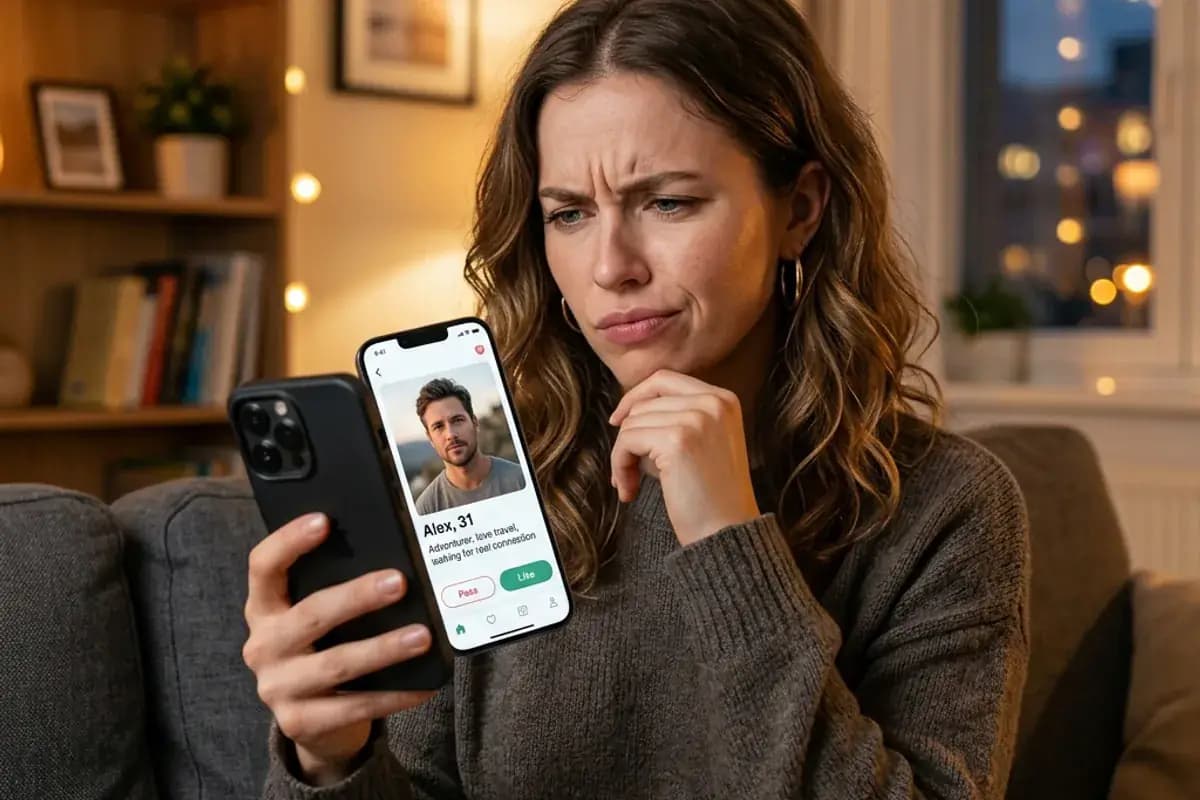
Warning Signs to Watch For
⚠️ They refuse or avoid video calls
This is the single strongest catfishing indicator. A real person who is genuinely interested in you will eventually be willing to do a video call. A catfisher cannot, because their face does not match the photos they are using. They will offer excuses — broken camera, bad internet, too shy, too busy — and the excuses will continue indefinitely. One or two postponements are normal. A consistent pattern of avoidance after weeks of conversation is a significant red flag that should not be rationalized away.
⚠️ Their photos look too polished or too perfect
Catfishers typically use photos stolen from models, influencers, or attractive strangers on social media. These photos tend to look professionally shot, consistently flawless, and lacking the casual variety that real dating profiles have. If every photo looks like a magazine shoot and there are no candid moments, no friends, no casual snapshots, the profile may not belong to the person using it. Run the photos through a reverse image search to see if they appear on other profiles or websites.
⚠️ The relationship escalates unusually fast
Catfishers often push emotional intensity early because they need to build attachment before their deception is discovered. Declarations of love within days or weeks, excessive flattery, future planning before you have met, and intense emotional bonding over text without any real-world interaction are manipulation tactics designed to make you emotionally invested before you have verified anything. Genuine connections develop gradually. Manufactured ones accelerate artificially.
⚠️ Their stories do not add up over time
Maintaining a fake identity over weeks of conversation is difficult. Details that contradict earlier claims, stories that shift when you ask follow-up questions, and biographical facts that do not quite align are all indicators that someone is constructing a narrative rather than sharing a real life. Pay attention to inconsistencies in their job, location, education, family situation, and daily routine. A single discrepancy might be a misunderstanding. Multiple discrepancies form a pattern.
⚠️ They always have a reason not to meet in person
The ultimate verification of someone's identity is meeting them face to face. Catfishers will avoid this indefinitely because it would expose the deception. Common excuses include living far away with no plans to visit, a demanding job that prevents travel, family emergencies that cancel plans repeatedly, and sudden health issues that appear whenever a meeting approaches. After several weeks of conversation, a genuine person will make reasonable effort to meet. A catfisher will make excuses.
⚠️ They ask for money or financial favors
Not all catfishers ask for money, but when they do, the request usually follows a period of emotional bonding designed to make saying no feel cruel. The scenarios are often urgent — a medical emergency, a stranded-while-traveling situation, a business opportunity that needs quick funding. No matter how emotionally connected you feel, sending money to someone you have never met in person and never verified through video is a risk that is never justified.

How to Protect Yourself
💡 Do a reverse image search on their photos
This is the fastest way to verify whether someone's photos are genuine. Save their profile photos and upload them to Google Images, TinEye, or a similar reverse search tool. If the photos appear on other social media accounts under a different name, on stock photo websites, or on multiple dating profiles, the person you are talking to is not who they claim to be. This check takes less than two minutes and catches the majority of catfishing attempts.
💡 Request a video call before meeting in person
A live video call is the most effective verification tool available. Ask for a casual FaceTime or video chat after a few days of conversation. Frame it positively — I would love to put a face to the conversation before we meet up. A genuine person will typically agree, even if they are a little nervous. Someone who consistently refuses or makes excuses is telling you something important through their avoidance.
💡 Ask specific questions about details they have shared
If someone claims to live in a specific city, ask about local details — neighborhoods, restaurants, weather, commute. If they claim a specific profession, ask questions that someone in that field would easily answer. You are not interrogating them. You are testing whether their claimed identity is consistent under normal conversational pressure. Genuine people answer these questions effortlessly. Fabricated identities struggle with specifics.
💡 Check their social media presence for consistency
A real person typically has a social media footprint that developed over time — old posts, tagged photos from friends, check-ins, varied content. A catfisher's social media is often newly created, sparsely populated, or entirely absent. If someone claims to be 28 but their Facebook account was created six months ago with almost no content, that gap deserves attention. Look for depth and history, not just existence.
💡 Ask for a photo with a specific pose or object
If you suspect catfishing but want to verify without direct accusation, ask for a photo doing something specific — holding up three fingers, with a specific item, or next to something in their home. This is impossible to fake with stolen photos and easy for a real person to do. Frame it as playful rather than suspicious. A genuine person will laugh and send it. A catfisher will avoid it.
💡 Trust the pattern, not the explanation
Catfishers are skilled at providing plausible explanations for individual red flags. The camera is broken. The trip got canceled. The emergency came up suddenly. Each explanation may sound reasonable in isolation. But when you step back and see a pattern — no video calls ever, no meeting ever, stories that keep shifting — the pattern tells you more than any single explanation. Trust what you observe consistently, not what you are told in the moment.
Frequently Asked Questions
Related Guides
Online Dating Safety
Explore related guides and tools to help you navigate this topic.
Get weekly bio ideas, openers, and dating templates
Join thousands of people improving their dating game with free weekly tips. No spam, unsubscribe anytime.
No spam. Free tips only. Unsubscribe anytime.
By subscribing, you agree to our Privacy Policy.
Use our safety tools
Check profiles and conversations for red flags with our free AI-powered safety tools.