

Why Your Hinge Messages Are Not Getting Replies
Hinge works differently from most dating apps, but most people still message on it the same way they would on Tinder or Bumble — and then wonder why nobody responds. On Hinge, every interaction starts with a specific like. You choose a photo or a prompt answer before you can say anything. That means your match already knows what caught your attention. When you follow that up with "hey, how's your day going," you are ignoring the context you just created, and it shows.\n\nThe other issue is volume. People on Hinge tend to receive fewer but more intentional likes than on swipe-heavy apps, which means expectations for quality are higher. A forgettable opener does not just get lost in a crowd — it signals that you did not care enough to try. That is a harder hole to dig out of than most people realize.\n\nThe good news is that the bar for a strong first message on Hinge is not some impossible standard. It is specific, low-pressure, and connected to something real from the profile. If you can reference what you liked and give the other person an easy reason to reply, you are already ahead of most messages in their inbox. For a broader look at opening strategies across apps, our guide to starting conversations on Hinge covers the foundational approach.
What Makes a Good First Message on Hinge
A strong Hinge opener has three qualities: it is observant, it has personality, and it invites a response. Miss any of those and the message either feels generic, flat, or like a dead end. The best first messages do not try to be brilliant. They try to be easy to reply to — and that is a skill most people underestimate.\n\nBeing observant means your message references something specific from the profile. Not the entire profile. One detail. A prompt answer about cooking, a photo from a hiking trip, a joke in their voice memos. When you reference that one thing, you prove you are paying attention, and that alone separates you from most of their inbox.\n\nPersonality means the message sounds like you actually wrote it. It has a voice. It might be curious, slightly competitive, playful, or earnest — but it does not sound like a template. If you could send the same message to fifty different people without changing a word, it is too generic.\n\nThe response invitation is the part people forget most often. You need to give the other person somewhere to go. A question works. A playful challenge works. Even a strong observation that practically begs for a follow-up works. What does not work is a statement that sits there like a closed door: "Cool profile" or "Love the vibe" or "You seem fun." Those are compliments, not conversations. If you want help crafting something more specific, our first message generator builds personalized openers based on the profile details you give it.
First Message Ideas Based on Hinge Prompts
Hinge prompts are the single best material you have for writing an opener, because the other person already told you what they care about. Your job is to respond to it like a human being who found it genuinely interesting — not like someone running through a script.\n\nHere are prompt-based message ideas you can adapt by swapping in the specific detail from whatever profile you are messaging:\n\n1. Your answer to that prompt is the most specific one I have seen on this app, and honestly I respect it. I need the full backstory.\n\n2. Okay, you cannot just casually mention that you make your own pasta and expect me not to have follow-up questions. What is your best dish?\n\n3. I liked that prompt answer because it is the kind of thing I would say and nobody would believe me either. Which version of the story do you tell at parties?\n\n4. That answer about your worst travel experience is doing a lot of heavy lifting. Was there a moment you almost gave up, or were you committed to seeing it through?\n\n5. Your "together we could" answer is bold. I need to know if you have actually tried that or if it is still on the aspirational list.\n\n6. You said you want someone who can keep up with your book recommendations. Consider this my formal application — what is the first title on the reading list?\n\nNotice the pattern. Each message picks one prompt, reacts to it with genuine curiosity, and ends somewhere the other person can easily respond. You are not performing. You are starting a conversation the way you would if a friend showed you the profile and said, "What would you ask this person?"\n\nIf you want more variations on this structure, our opening line generator can help you draft prompt-specific openers quickly.
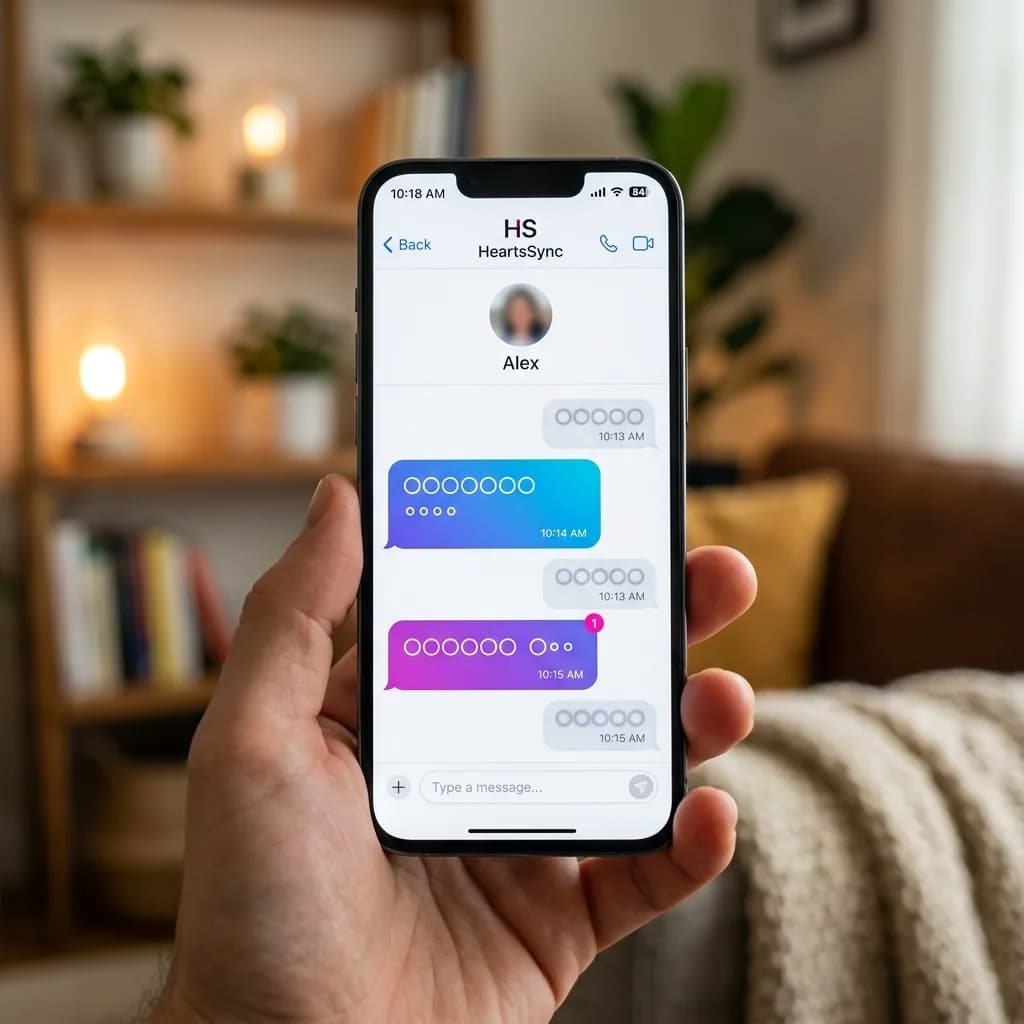
First Message Ideas Based on Photos and Profile Details
Not every Hinge profile gives you great prompts to work with. Sometimes the strongest material is a photo, a location tag, or a small detail buried in the profile that most people scroll past. Photo-based messages work when they go beyond appearance and focus on the story or context the image suggests.\n\n7. That hiking photo is serious. Was that a planned trip or a spontaneous "let's see what happens" kind of day?\n\n8. I need to know the story behind that group photo — specifically, are you the one who organized the trip or the one who almost did not go?\n\n9. That restaurant in your photo looks exactly like the kind of place I would walk past three times before committing. Was it worth it?\n\n10. I noticed the guitar in one of your photos. Do you actually play regularly or is it more of a "someday I will get back to it" situation?\n\n11. Your dog has main character energy. Name, breed, and how long it took for them to completely take over your apartment.\n\n12. That city skyline shot is gorgeous. I am guessing either Seoul or Tokyo — am I close?\n\nThese messages work because they treat photos as conversation material, not just visual content. You are asking about the experience behind the image, which naturally gives the other person something substantial to share. A message about the story behind a photo is almost always more effective than a comment about how someone looks in it.\n\nProfile details like job titles, school names, and neighborhood tags can also be useful if you have a genuine connection to them. "Wait, you went to [university]? I almost ended up there — what made you choose it?" is a real question that creates a real thread. Just avoid forced connections. If you have nothing authentic to say about a detail, skip it and find something else.
Playful and Creative Openers That Still Feel Natural
Some people respond better to messages that have a slightly playful or unexpected angle. The key word is "slightly." You are not performing a comedy set. You are showing that you have personality beyond the standard dating app script.\n\n13. I have a theory that your prompt answers reveal you are either incredibly fun or dangerously competitive. Which one should I prepare for?\n\n14. Your profile gave me enough confidence to skip the small talk and ask the important question: coffee walk, taco spot, or bookstore date?\n\n15. I am going to be honest — I spent more time reading your prompts than I usually spend on entire profiles. That felt like it deserved a mention.\n\n16. If your weekend plans are as good as your prompt answers suggest, I feel like I should be taking notes.\n\n17. Okay, your taste in music is either exactly like mine or the opposite, and either way I want to compare playlists.\n\n18. I liked your prompt about cooking failures. My worst one involves a smoke alarm and a very optimistic attempt at stir fry. I feel like we should trade stories.\n\nThe thread connecting all of these is that they sound like something a real person would say in a real moment of interest. They are not try-hard. They are not rehearsed. They take a small observation and push it toward a conversation. If you are not sure whether your message leans playful or forced, read it out loud. If it sounds like something you would text a friend about someone's profile, it is probably in the right range.\n\nFor more detailed guidance on keeping things going after the opener, see our guide to keeping dating app conversations alive.
Common Hinge Messaging Mistakes That Kill Your Chances
Even people who understand the basics still make mistakes that quietly tank their response rates. Here are the ones I see most often.\n\nThe "empty like" problem. Hinge lets you like a photo or prompt without adding a comment. Technically it works as a match attempt, but it is the weakest move on the platform. Adding even a short, specific message dramatically increases the chance of a match. An empty like tells the other person nothing about you and gives them no reason to engage.\n\nThe appearance-only compliment. "You're gorgeous" or "Love your smile" are easy to write and easy to ignore. These messages rarely lead to conversation because they do not contain any direction. They are the texting equivalent of smiling at someone across a room and then standing still.\n\nThe interview question. "Where are you from? What do you do? What are your hobbies?" fired off as a list feels like a job screening, not a date conversation. One focused question tied to a profile detail works much better than three disconnected ones.\n\nThe copy-paste. If your message could work on literally any profile, it is not specific enough. Hinge rewards personalization more than any other major app. Generic lines get treated as generic effort.\n\nThe over-investment. A massive first message with four paragraphs of personal information and deep emotional honesty puts too much pressure on a stranger. Keep the opener light. There is plenty of time to go deeper once the conversation has actual momentum.\n\nYour profile matters too. A strong opener sent from a weak profile still struggles. If you are not getting the results you want, it is worth checking whether your photos, prompts, and overall presentation are doing their part. Our dating profile writing guide covers that side of the equation, and our profile score analyzer can give you a quick read on where you stand.
How to Build a Messaging System That Works Consistently
Getting one good reply is a start. Getting consistent replies means building a process. That does not mean turning into a robot or sending scripted messages. It means developing habits that make your messaging stronger over time without burning you out.\n\nFirst, always start from the profile. Before you type anything, decide which photo or prompt you are responding to and why it caught your attention. That five-second step prevents most generic messaging.\n\nSecond, keep a loose mental library of message structures that have worked for you. Maybe curiosity-driven questions get the best replies. Maybe playful challenges land better. Maybe earnest, straightforward messages are your strongest move. Track what works and do more of it — not by copying lines, but by understanding the pattern underneath them.\n\nThird, message soon after matching. On Hinge, where the pace is slower and people are often more selective, letting a match sit untouched for days signals low interest. You do not need to reply in seconds, but same-day is usually better than "I will get to it eventually."\n\nFourth, do not over-invest before you have a reason to. Your first message should cost you thirty seconds of genuine attention, not thirty minutes of agonizing. If you are spending more time drafting an opener than you would spend ordering coffee, you are overthinking it. The best opening messages are specific and quick, not elaborate and perfect.\n\nFinally, know when to move on. Not every match will reply, and not every conversation will go somewhere. That is normal and not a reflection of your value. The goal is not a 100% response rate. The goal is a reliable process that regularly creates real conversations with people you actually want to talk to.\n\nIf you want to see how your opening style compares across different apps, our full comparison of Tinder, Bumble, and Hinge breaks down how messaging dynamics shift between platforms. And if you are looking for serious connections specifically, the best dating apps for serious relationships guide can help you decide where to focus your energy.
Related Guides
Dating App Messaging Mastery
Explore related guides and tools to help you navigate this topic.